Tuesday, February 19, 2013
Back again!
I'm back, after a long break! We have a new addition to our family who is keeping me very busy! I will be posting updates soon, along with information about a new editing venture I'm persuing. Happy writing!


Wednesday, October 31, 2012
The Secret Sense of Wildflower

Wednesday, October 17, 2012
The book trailer debate...
There is a lot of discussion right now (especially on Twitter) about whether or not book trailers work. Well, it depends what you mean by "work." Do they help sell books? Do they help raise an awareness of reading? How do you judge a successful book trailer?
In her excellent blog, Catherine, Caffeinated, indy author Catherine Ryan Howard discusses the value of book trailers. She gives two great examples of trailers from author Maria Semple's novel Where'd You Go Bernadatte -- one, a cutesy "this-is-what-the-book-is-about" cartoon that I found so annoying I couldn't finish watching! The other is a spoof, with Ms. Sempel trying out different (bad) pitches to various famous authors and Jeopardy! champions. It is funny, original, and really entertaining! I don't know if I'll buy the book -- I'm still not sure what it is about -- but the trailer definitely made her name stick in my head.
In my opinion, Ms. Sempel's second trailer was extremely successful. Because of it, she's featured on a popular blog, and now I'm mentioning it on my (albeit less well-known) blog, and maybe from this post, word of mouth will take her name and her novel a little farther into the blogosphere... It's gotten people talking, in other words!
 But what about writers who don't have the luxury of expensive book trailers with cameo performances by famous actors? I think simple, thoughtful book trailers can also help get the word out. I discovered author Gillian Mawson on Twitter. She's written a nonfiction book called Guernsey Evacuees: The Forgotten Evacuees of the Second World War, soon to be published by The History Press. It has a lovely, evocative cover, and Ms. Mawson recently put out a book trailer on YouTube that has haunting music and sepia photo shots and is very compelling, especially if you're interested in World War II.
The "successful" trailers I've seen have left me with a lasting impression of the author and always a feeling of great optimism and expectation about what's to come in the book industry. And if you can generate excitement about reading, then you are helping all authors. While we may not be able to measure the success of book trailers in actual book sales, I believe that well-made trailers do have a positive impact on individual authors' careers in the long-term. What do you think?
In her excellent blog, Catherine, Caffeinated, indy author Catherine Ryan Howard discusses the value of book trailers. She gives two great examples of trailers from author Maria Semple's novel Where'd You Go Bernadatte -- one, a cutesy "this-is-what-the-book-is-about" cartoon that I found so annoying I couldn't finish watching! The other is a spoof, with Ms. Sempel trying out different (bad) pitches to various famous authors and Jeopardy! champions. It is funny, original, and really entertaining! I don't know if I'll buy the book -- I'm still not sure what it is about -- but the trailer definitely made her name stick in my head.
In my opinion, Ms. Sempel's second trailer was extremely successful. Because of it, she's featured on a popular blog, and now I'm mentioning it on my (albeit less well-known) blog, and maybe from this post, word of mouth will take her name and her novel a little farther into the blogosphere... It's gotten people talking, in other words!

The "successful" trailers I've seen have left me with a lasting impression of the author and always a feeling of great optimism and expectation about what's to come in the book industry. And if you can generate excitement about reading, then you are helping all authors. While we may not be able to measure the success of book trailers in actual book sales, I believe that well-made trailers do have a positive impact on individual authors' careers in the long-term. What do you think?
Monday, October 1, 2012
My first "guest post"!
Just wanted to share the news that I have a guest post entitled "Permission to be Southern" on fellow writer Melinda McGuire's blog, "melindamcguirewriters." My essay is about being born in Scotland but growing up Southern and how it's affected my writing!
In her series, "Southern Creatives," Melinda features tons of interviews and essays with Southern writers, editors (like Erin Z. Bass, editor of Deep South Magazine), and all creative types. Check it out today!
In her series, "Southern Creatives," Melinda features tons of interviews and essays with Southern writers, editors (like Erin Z. Bass, editor of Deep South Magazine), and all creative types. Check it out today!
Monday, September 24, 2012
Rich Fabric, an anthology of quilting

And, even better, all the profits go to support the Twighlight Wish Foundation, a non-profit charity that grants wishes to senior citizens who live below the poverty level.
In December, Melinda will be releasing an ebook version, which will also include music! What a great idea! So, stay tuned for more info... I hope to post an interview/guest post with Melinda in the coming months (if she has time!).
Monday, September 10, 2012
Short story corner...
My brain is a little worn out these days, so I'm posting a short story I wrote several years ago, based on a dream I had about a friend of mine belting out "Moon River" on a rooftop! If you're interested in reading any more of my stories, check out Rocky Road on smashwords.
"Moon River Balustrade"
Bill pushed a mug of beer over to
Vera; some of it slopped onto the scratched table.
“Drink
this. You’ll feel better.”
Vera took
the mug and began chugging the beer like it was water in the Mohave Desert.
Then she thumped it down and sat there staring straight ahead for several
moments, a trail of beer dripping from one side of her mouth and down her chin
as though a snail procession had passed across her face.
“What am I
going to do?” She fingered her wedding band and engagement ring, clicking them together like a set of nesting tables. The engagement ring was a
glistening diamond with rubies surrounding it like cherries on a plate of meringue.
Bill put out a hand.
“It’s going
to be okay. You’ll find something else.” He left his hand there, but she didn’t
take it. After a while he brought it back onto his lap.
“We just
bought a boat.” Vera wiped the side of her mouth with her hand. “A bass trawler
with room for 10 people. It’s even got a refrigerator.” She started crying
again. “And Nathan just made the down payment on the lake house. We were going
to move in this weekend.”
Bill stared
at his shoes, $7.99 on special at the Payless across the street from his
apartment. One of the laces had snapped and he’d tied a knot to keep it
together. The rubber was starting to wear away on one toe where he tapped his
foot against the air conditioning vent at work to help keep him awake in the
afternoons.
“Nathan has
a good job. You guys’ll be fine.” He tried to sound fatherly, but a lump came
up in his throat whenever he said her husband’s name.
Vera wiped her face with one of the
cocktail napkins. Then she reached out her hand, and he put his in it, his
heart palpitating. Her hand was warm and a little tough, like she’d worked in
the red clay soil. He knew from gardening his small plot in the county that the
clay had a way of sucking all of the moisture out of your skin and leaving it
dried up like an autumn leaf.
She only
held his hand for a second. “Thanks, Bill. You’re a pal.” Then she let it go,
and he felt the warmth where her hand had been, lingering as though a small
animal had rested there.
“Let’s get
out of here.” She stood up. “I need some air.”
Bill threw
a $20 bill on the table and followed her, pushing stray chairs out of the way while
she weaved between them like a garden snake.
Outside was
warm and humid, and the sun was just beginning to set. Vera hooked her arm
through his.
“Where are
we going?”
Vera sighed
and looked around as though seeing Elm Street for the first time. “I’ll show
you where we’re going. Come on.”
She walked
fast, leading him like a pet poodle. They reached a side street and she took an
abrupt turn, nearly stepping on his foot. Bill started to sweat and wished he’d
left his jacket in the car.
At the
parking deck, Vera jerked to a stop, and Bill bumped into her, catching a whiff
of her Intrigue perfume; he’d smelled it at the Belk’s counter when he was
trying to decide what to get her for her birthday. In the end, he’d picked an
expensive pen set and a leather-bound journal. She’d sent him a thank-you card
in the mail, signed, “Love Vera and Nathan.”
Vera pushed
open the heavy metal stair well door. It creaked, and Bill reached out to help
her, and for a split-second he had his arm around her, all the blood in his
body reaching the same spot at once.
Inside the
stairwell it was even hotter, and Bill paused to take off his jacket. Vera was
already five steps ahead of him, holding onto the rail, her rings clanking
against the metal. She looked upwards at the glass skylight, as though she was
a spy in a James Bond movie. They always went to the roof in those movies; Bill
never knew why because once up there, the only option was to kill or to jump.
Neither seemed a good option to him.
“Where are
we going?” he asked, out of breath. He turned purple when he got too hot, and
his bald head stood out like a beacon. He hoped it was dark by the time they
got outside again.
“Just keep
going,” Vera yelled, now about 20 steps ahead of him.
Bill heard
another door opening, and when he looked up again, Vera was gone.
“Vera?” He
started to panic, imagining that she had disappeared, and he was really alone.
“Vera?” He loosened the top buttons of his shirt. Blue and purple spots started
to float in his eyes; his forehead felt cold. He sat down on a step and put his
head between his knees.
“Bill? What
are you doing?” She was looking over the railing from the top landing. “Come on
up here!”
It was
almost dark on the roof, the last rays of the sunset lingering on the sides of
office buildings and in the steel trimmings of signs and antennas. Bill grasped
the metal railing someone had thoughtfully stuck around the rooftop. People
laughed down below, women who sounded like they were on a night out, perhaps an
evening away from the boyfriends and husbands. He felt an ache at the thought
of the husbands waiting, curled up one the couch, smiling as the other person
came back that night, smelling of smoke and strawberry daiquiris and Coco Chanel,
laughing and telling him how some guys had tried to dance with them, but they’d
just ignored them and rolled their eyes.
“Isn’t it
beautiful out here?” Vera took a cigarette from her purse and lit up. The smoke
swirled around her face like a cloud of mist, and Bill wanted to put his hand
through it and dispel it.
“Yeah, it’s
nice. What made you think of this?”
“I always
come up here when I’m stressed.”
“Oh.” He’d
hoped this was her first time, a spur-of-the-moment kind of discovery.
Vera
sighed. “When I was a kid I wanted to be an opera singer.”
“Really?”
Bill wished he smoked, sometimes.
“When I was
about 8 or 9, I used to sing in the bathtub, and I didn’t care who heard me.
Actually,” she took another drag, “it never occurred to me that anyone was
listening. You know how it is when you’re a kid—the whole world revolves around
you.”
He nodded.
“So, I was
singing in the bathtub one day, just belting out Sesame Street songs and old
Jean Kelly tunes that I’d seen on movies with my grandmother; I thought I was
really good!”
They
laughed.
“Then, from
nowhere, I hear this voice in the hallway, shouting, ‘What is that awful noise?
It sounds like a cat died!’ And I froze, like I’d been shot or something, you
know?”
Bill
nodded.
“Turns out
it was my Auntie Delia. She was a piece of work. She wore fox furs with the
heads still attached and used to tell me they were alive. I had nightmares
about that for years!”
Bill
couldn’t help laughing. “So, what happened then?”
Vera threw
her cigarette over the edge of the roof, and Bill stared after it, hoping no one down below
would catch fire.
“I never
sang again. I was so humiliated. It was like the spell had been broken.”
They stood
there, watching the sky turn red and dark, purple shoots streaming through it like
Bill’s purple face.
“That’s a
shame,” he said. “You shouldn’t let anyone stop you from--”
It was then
that Vera broke into song. She just opened her mouth, and out came a powerful
earthy voice that blanketed everything—the sky, the cars in the street below,
and all the thoughts in Bill’s head.
“Moon River…”
she sang, and Bill watched her eyes getting shiny and her face muscles relax,
and she looked for a moment like Ingrid Bergman, staring out into the sky with
her arms at her sides in a dramatic role.
After a
while, people began to appear below them, hearing her perhaps from the street
or from downstairs, getting into their cars and stopping in surprise. A small
group had soon gathered, looking up at Vera singing.
She got to
the middle, “Moon river, wider than a mile ...” and the energy seemed to build,
and Bill felt it in his chest and stomach, and suddenly someone from the back
of the group joined Vera in a small trembly voice, “I'm crossin' you in style some
day…” and everyone smiled and seemed to relax. It was like a relief valve in a
tire had been loosened.
Vera
finished the song and stood there with her hands clasped in front of her,
rather limp but happy looking.
“That was
wonderful,” Bill said. “You can sing any time for me.”
She looked
past him to the crowd, who slowly began to clap, like people becoming
conscious. Then, one by one, they walked away, back to their cars, or wherever
they’d come from. Vera started to shrink as each person walked away. When the
last one had gone, she started crying.
“I really
thought it would make a difference,” she sobbed, holding onto the rail. “Wasn’t
that stupid of me, thinking that something as silly as a song would make a
difference?”
Bill put
his arms around her and brought her close to him. “It did. It really did.”
But she was
staring out over the rooftops, away from him, looking out at her future, the
boat, the lake house, the ring on her finger glinting in the last strands of
light that finally dissipated. And they were left in darkness.
Wednesday, September 5, 2012
6 unexpected Southern lit. recommendations
Another quickie post, as the past two weeks have been busy -- a friend in hospital, a sick kiddo... Hard to focus during tough times, don't you think?
Quirk Books had an interesting post the other day, "Six Unexpected Southern Literature Recommendations." While some authors weren't really unexpected to me -- come on, Eudora Welty, Flannery O'Connor, Walker Percy? Everyone's heard of them, right! Others I was less familiar with -- Jean Toomer, Harry Crews, and Natasha Trethewey. How about you? Please share your "unexpected" Southern favorites!
Quirk Books had an interesting post the other day, "Six Unexpected Southern Literature Recommendations." While some authors weren't really unexpected to me -- come on, Eudora Welty, Flannery O'Connor, Walker Percy? Everyone's heard of them, right! Others I was less familiar with -- Jean Toomer, Harry Crews, and Natasha Trethewey. How about you? Please share your "unexpected" Southern favorites!
Sunday, August 26, 2012
Roundup of new Southern writers...
Just a quickie post today...
Author and book reviewer Alle Wells has a great roundup of her new Southern favorites! Check out her guest column, "Romancing the South," on Bette Lee Crosby's website.
Author and book reviewer Alle Wells has a great roundup of her new Southern favorites! Check out her guest column, "Romancing the South," on Bette Lee Crosby's website.
Monday, August 6, 2012
Mixing writing and music -- the way of the future?
If you happen to be near Dalton, Georgia, this Thursday (August 9th), be sure to stop by Chelsea's on Thornton at 5 pm to hear author Kimberly Brock, who wrote The River Witch, and musical act Grits & Soul for a special collaboration connecting Southern fiction and music.
I think it's a great idea to combine music and reading -- both books and songs tell stories, and both capture an audience and transport them to another place. Despite this fact, I've only come across a few authors who've taken advantage of a musical connection to help promote their work.
 North Carolina author Lee Smith was working on her historical novel On Agate Hill, when friend and songwriter Alice Gerrard asked her to write the liner notes for a new CD she was working on. Gerrard's song "Agate Hill" so inspired Smith that the two teamed up for readings -- Smith read, and Gerrard and friends accompanied with music. The readings, in turn, inspired Gerrard's CD, The Road To Agate Hill. Listen to an interview with Lee on The State of Things.
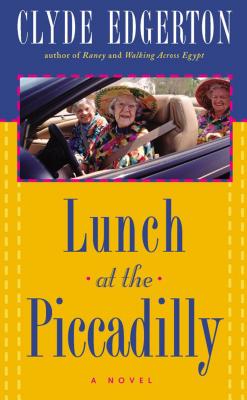
 Another NC author, Clyde Edgerton, often combines his love of music and writing. Several years ago, I went to hear him read from Lunch at the Piccadilly, where he played his guitar and sang funny songs that complemented the book. It was a great experience, the audience loved it, and the place was packed! Now, there's even a musical comedy inspired by his book called Lunch at the Piccadilly, composed by Mike Craver and directed by Steve Umberger.
Songs, CDs, plays... What a great way to build a diverse reading audience! If you know of any other writer-music duos, please let share in the comments section!
I think it's a great idea to combine music and reading -- both books and songs tell stories, and both capture an audience and transport them to another place. Despite this fact, I've only come across a few authors who've taken advantage of a musical connection to help promote their work.

Songs, CDs, plays... What a great way to build a diverse reading audience! If you know of any other writer-music duos, please let share in the comments section!
Monday, July 30, 2012
Southern coal: take a trip back in time

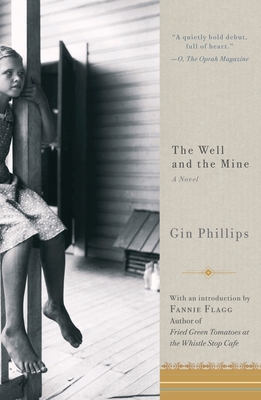
Needless to say, my impressions of coal mining are not pleasant -- a necessary, dirty, and dangerous job for people who have few options. While lots of nonfiction books explore coal mining, I had a hard time finding many Southern fiction books about it. Susan Tekulve of Spartanburg, SC, caught my attention -- she recently won the 2012 S.C. First Novel Competition (sponsored by the S.C. Arts Commission and Hub ity Press of Spartanburg) for her novel The Nipper. Her book follows the lives of a coal mining Italian immigrant family as they struggle to survive in a tiny Virginia town.

Subscribe to:
Posts (Atom)